Kathmandu, June 25 – A one-day training program on drug abuse prevention was held in Kathmandu to raise awareness among Nepali athletes about the dangers of substance abuse and their role in prevention efforts.
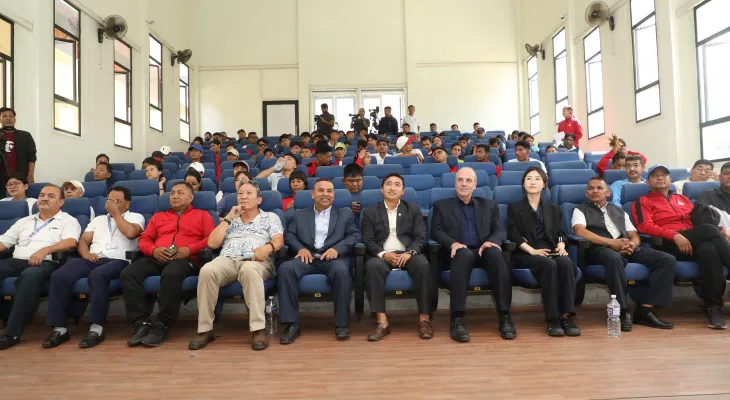
The event was jointly organized by the National Sports Council (NSC) and the Nepal Sports Federation Against Drugs and AIDS and took place at the Auditorium Hall of the International Sports Complex, Satdobato. The training was held ahead of International Day Against Drug Abuse and Illicit Trafficking, which is observed globally on June 26 (Ashar 12).
The program was attended by around 200 participants, including athletes from various sports currently undergoing national team training, coaches, and sports officials. The training included discussions and presentations on anti-doping, the impact of drug abuse on physical and mental health, and the crucial role athletes can play in spreading awareness.
According to Rishiraj Ojha, president of the Sports Federation Against AIDS, the initiative aimed to empower athletes with knowledge, given their influence and strength in promoting a drug-free society. “Athletes have the courage and discipline needed to stand against drug abuse, making them powerful advocates for change,” Ojha stated.
Key speakers included Tankalal Ghising, Member Secretary of NSC; Olympian and runner Santoshi Shrestha; Ulrich Meiser, Head of the United Nations Office on Drugs and Crime (UNODC) in Nepal; and Yubaraj Lama, President of the Nepal Karate Federation.
In his remarks, Member Secretary Ghising emphasized that every athlete must understand the consequences of doping, as it can end their sports career. He added that such awareness programs are vital for safeguarding the future of athletes.
The session also covered key questions such as, what is anti-doping? What are the effects of banned substances? When and how are athletes tested? Experts explained the long-term impact of doping and highlighted the role athletes can play in educating the general public on the importance of clean sports.
The training aligns with the UNODC’s belief that sports and athletes play a pivotal role in preventing drug abuse and promoting healthy lifestyles.


Write A Comment